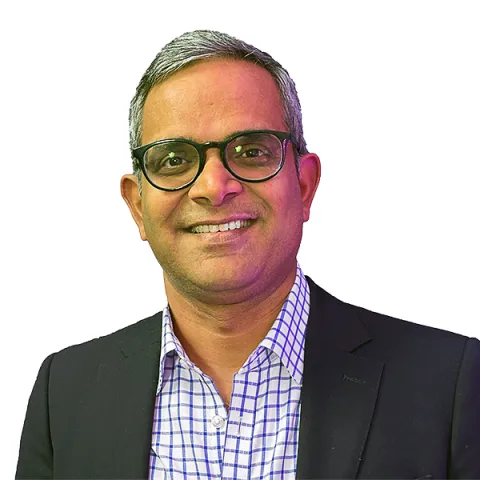
Founded in 2017, UK-based Finastra is a global leader in financial services software, trusted by 7,000+ customers including 40 of the top 50 banks. In Payments, Finastra is focused on partnering with banks, corporates, financial institutions, and NBFIs to deliver modern, reliable and secure mission-critical payments and financial messaging solutions shaped by their needs and driven by innovation. We recently sat down for an interview to find out more.
How can banks turn payments modernisation into sustained business value? In the view of Radha Suvarna, Chief Product Officer, Payments at Finastra, banks create tangible value from payments modernisation when they approach it as a long-term platform strategy rather than a one-time technology upgrade.
Suvarna said, 'At the foundation, modernisation enables consolidation and standardisation by replacing fragmented, rail-specific systems with unified platforms that reduce cost, simplify operations, and deliver consistent customer experiences across markets and payment types.
Building on this foundation, payments are no longer treated as back-office utilities but as strategic revenue enablers. Finastra's view is banks that modernise effectively can launch products faster, respond to 24/7 customer expectations, support treasury services, embedded finance, cross-border flows, and real-time liquidity management, while accelerating time-to-market and unlocking new commercial opportunities through data and orchestration.
For Suvarna, to sustain value banks must look beyond core transaction processing and address the full payments lifecycle. As volumes grow and complexity increases, operational layers such as investigations, exception handling, and service queries become critical to maintaining efficiency and service quality.
He added, 'Enabling AI-driven intelligence into these workflows through solutions like OperatorAssist that are built on top of Finastra's modern payments platforms delivers faster context interpretation, and streamlined resolution.
The key is ensuring investments are tied to measurable outcomes, whether that is customer experience uplift, operational resilience and efficiency, faster time-to-market, or revenue growth. Ultimately, the banks creating lasting value are the ones building platforms designed for continuous evolution, rather than relying on periodic transformation cycles every decade.
A critical aspect of modern payments architecture is value at scale. Value at scale in modern payments architecture is the ability to grow transaction volumes, geographies, and services without creating matching increases in cost, operational complexity, or infrastructure strain. The goal is to achieve scalable efficiency, said Suvarna.
In practice, that means building a single payments backbone that supports multiple rails, markets, and customer types through shared infrastructure rather than fragmented systems. Standardisation reduces duplication, lowers maintenance costs, and improves resilience.
Suvarna added, 'A modern architecture also allows centralized orchestration with localized flexibility. Banks can maintain consistent control and visibility globally while still adapting to market-specific regulations, schemes, and customer expectations. That balance is becoming increasingly important as payments become more real-time, always-on, and globally interconnected.'
OperatorAssist built on centralized, configurable architectures enables faster interpretation of payment context, guiding resolution workflows, and helping teams manage growing complexity without a proportional increase in effort.
The benefit of modular platforms
How are modular, composable platforms cutting cost and reducing complexity across markets?
In the view of Suvarna, modular, composable platforms are reducing cost and complexity by allowing banks to modernize incrementally rather than through large-scale, high-risk transformation programmes. Instead of replacing entire core environments at once, institutions can introduce new capabilities in phases, reducing disruption while accelerating delivery.
This approach also creates far greater strategic flexibility. Banks can adapt to changing regulations, customer expectations, and market opportunities without repeatedly reinventing their underlying architecture. By using standardized integration frameworks and plug-and-play components, institutions can deploy capabilities selectively based on regional priorities while maintaining consistency across the organization.
A major advantage is the reduction in total cost of ownership. Many banks still operate fragmented legacy estates with duplicated infrastructure across markets and payment types. Composable architectures simplify that landscape through reuse and standardization, reducing maintenance overhead while improving interoperability and operational resilience, added Suvarna.
He said, 'Over time, this creates a more scalable and efficient operating model. Banks can enter new ecosystems faster, integrate partners more easily, and establish a consistent architectural foundation across regions, products, and customer segments, all while supporting the speed and flexibility required in modern real-time payments environments.'
Making payments architecture future ready
According to Suvarna, payments architecture becomes futureready for AI and digital assets when it is built for continuous evolution rather than structural replacement. The core capability is absorbing new technologies without destabilising existing rails or operations.
A strong, unified data foundation is essential, enabling realtime intelligence, automation, and AI-driven decisioning across both traditional and digital asset systems. This turns payments infrastructure into an active intelligence layer, not just processing plumbing.
Suvarna added, 'Future readiness also depends on openness and coexistence, supporting traditional payment rails alongside stablecoins, tokenised deposits, and programmable settlement models within a single interoperable framework.
For Suvarna, it's about agility at the core, which includes the ability to adapt quickly to technological, and market shifts while enabling entirely new AI- and digital asset-driven business models.
The power of reliable architecture
How can scalable, resilient architecture accelerate time-to-market for new payments services? From the standpoint of Finastra, this kind of architecture speeds time-to-market by giving banks a foundation where new payment capabilities can be introduced without major structural disruption.
Instead of relying on large, complex transformation programmes, institutions can continuously evolve their platforms and respond far more quickly to market opportunities and regulatory change. This flexibility allows banks to launch new payment services faster while leveraging existing infrastructure, said Suvarna.
Suvarna said scalable infrastructure turns payments architecture into a strategic lever for speed, innovation, and competitiveness, enabling banks to adapt continuously in an increasingly real-time financial environment.
How banks are extracting ISO 20022 value
Banks are increasingly extracting value from ISO 20022 by treating it as more than a compliance requirement. The richer, structured data model gives institutions greater transparency and control across the payment lifecycle, improving visibility, decision-making, and operational efficiency.
Suvarna remarked, 'Enhanced data quality strengthens fraud prevention, compliance, and risk management. At the same time, standardized messaging supports smarter routing, improved liquidity optimization, and stronger interoperability across domestic and cross-border payment ecosystems'
The power of Gen-AI intelligent operators
Gen AI-powered intelligent operator solutions are transforming operations from reactive processing into proactive, insightdriven environments. Teams can identify risks, anomalies, and inefficiencies in real time, enabling faster decision-making.
'These platforms also improve the speed and consistency of resolving complex payment scenarios. By combining contextual data with intelligence, Gen AI augments human expertise with recommendations, prioritization, and adaptive insights, reducing manual effort while improving accuracy at scale,' said Suvarna.
Finastra OperatorAssist represents this shift in practice, complementing generative AI across the payments lifecycle. By combining deep payments-domain intelligence with natural language interaction, it enables operators to interpret ISO 20022 messages, navigate workflows, and execute actions more intuitively. The approach helps standardise decision-making, reduce reliance on individual expertise, and improve consistency across teams.
Suvarna summarised, 'This shifts operations from a back-office support function into a strategic driver of customer experience, operational efficiency, and business resilience.'
Where alternate money movement can deliver outcomes
For Suvarna, AI, stablecoins, and tokenised deposits are alternate money movement instruments that can deliver outcomes across efficiency or economic gains rather than broad wholesale replacement of existing systems.
AI is already improving operational decision-making, exception management, and workflow efficiency by helping institutions identify issues faster, automate resolution paths, and augment human expertise with real-time intelligence.
At the same time, stablecoins and tokenized deposits are gaining traction in specific payment and treasury corridors where speed, liquidity efficiency, and programmability provide measurable value. Real-time settlement, 24/7 liquidity movement, and programmable value transfer are becoming increasingly relevant in cross-border payments, capital markets, and treasury operations.
Suvarna concluded, 'In particular, Finastra is exploring the role of stablecoins as part of the shift toward alternate money movement, ensuring it remains at the forefront of innovation and interoperability as these capabilities evolve.
The AIFinTech100, which this interview was a part of, can be downloaded here.